01 / 06
The rug panels
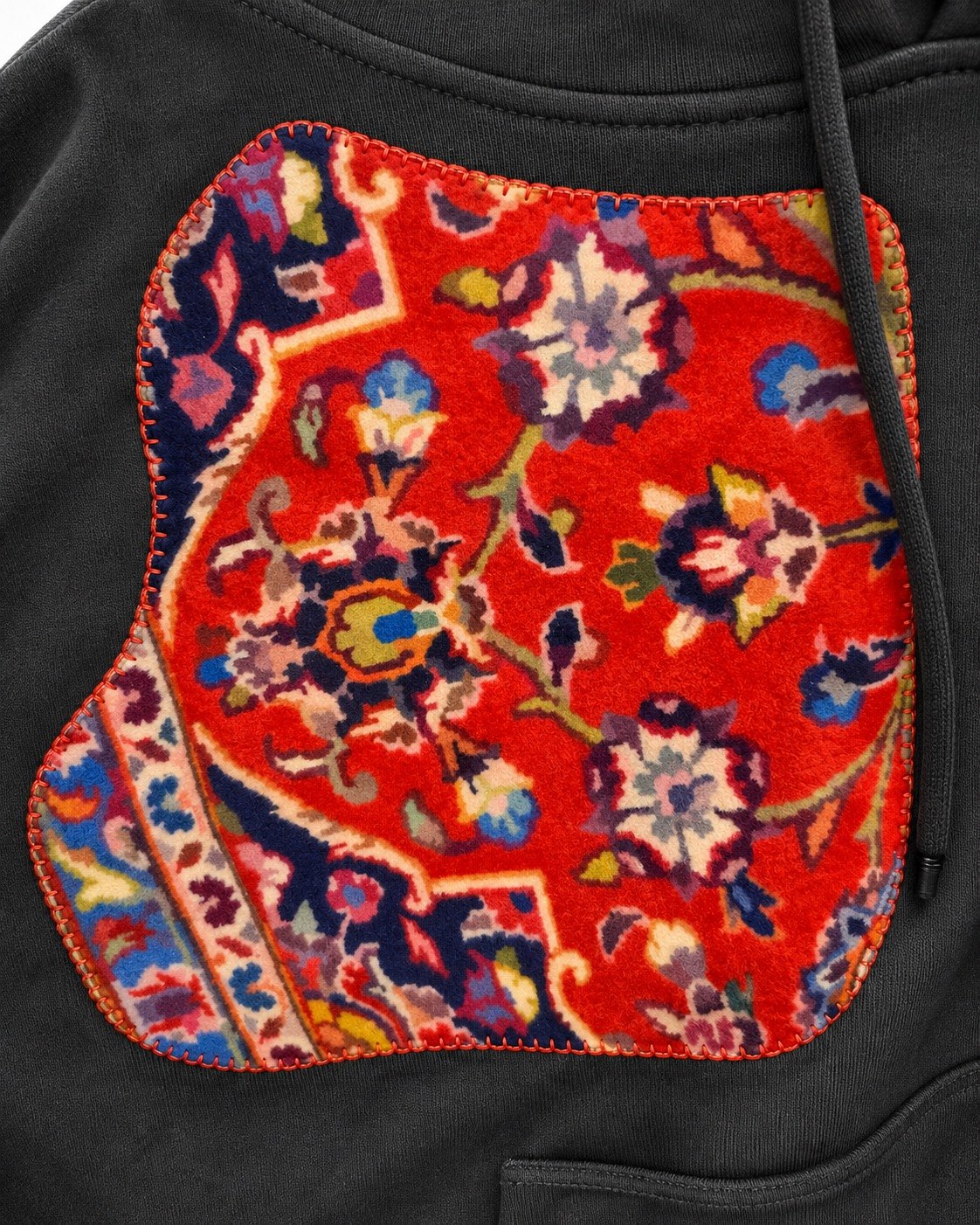
Two panels cut as mirrored corners of a red Persian carpet: a madder-red field of palmettes and blossoms, indigo corners and an ivory guard border. Side by side, they read as one rug split by the drawcords.
Aleizad · Chapter Zero
نخواهد ماند
A red Persian rug and a six-hundred-year-old ghazal, brought together in one garment. A reminder, worn close, that hard days pass and only kindness remains.
«جز نکوییِ اهلِ کرم نخواهد ماند»
“Nothing but the goodness of the generous will remain.”
Hafez of Shiraz
01 — The Piece
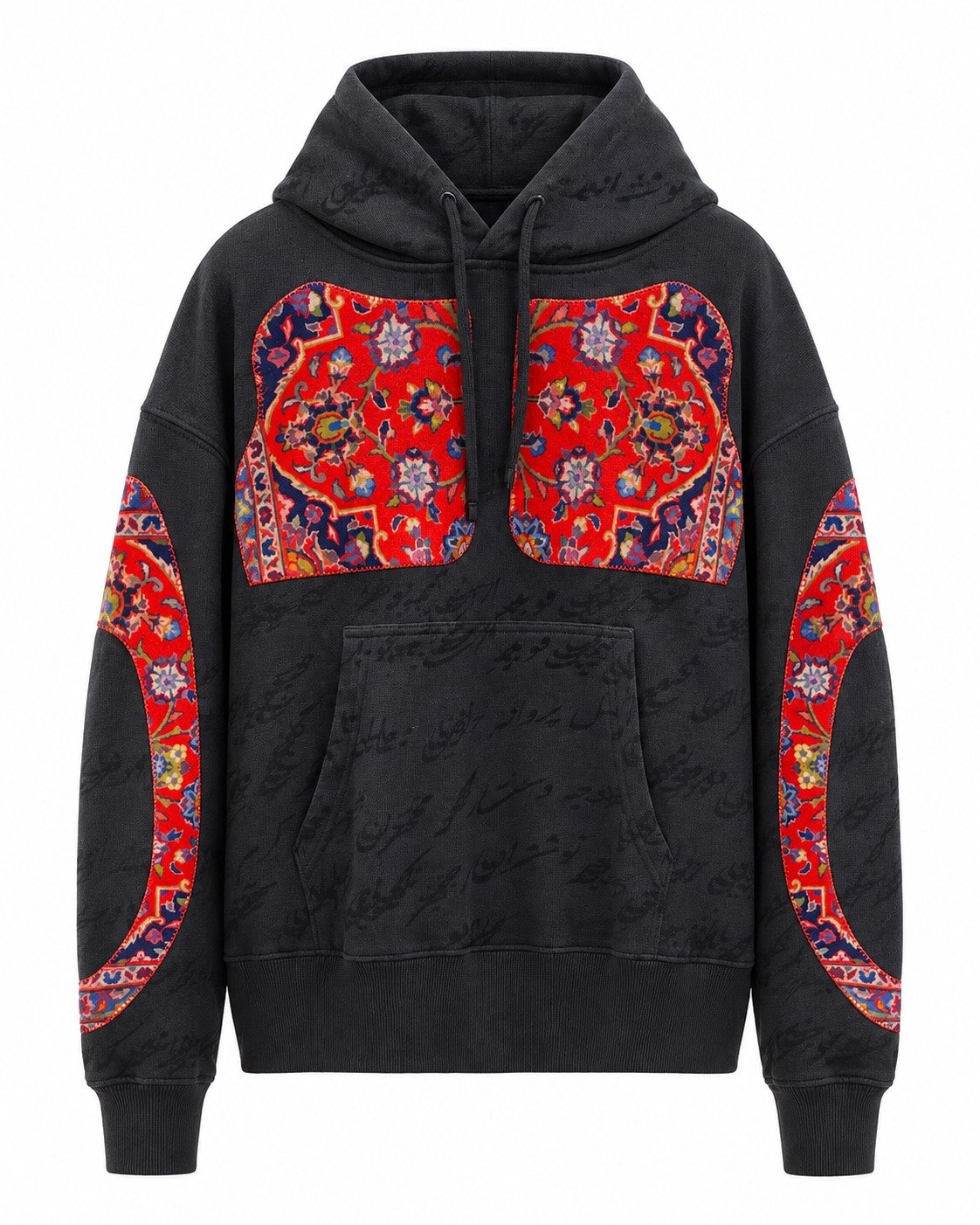
In Persian homes, the rug is the first thing laid down and the last thing given away. It holds the family. The poetry of Hafez does the same work in words: it is opened at every Nowruz and every Yalda night, and its lines are read as advice. Hoodie 00 carries both. The rug is worn on the outside, in colour. The poem is written into the cloth itself, black on black, there for whoever looks closely.
Explore
Tap a number to see what went into each detail.
01 / 06
Two panels cut as mirrored corners of a red Persian carpet: a madder-red field of palmettes and blossoms, indigo corners and an ivory guard border. Side by side, they read as one rug split by the drawcords.
02 / 06
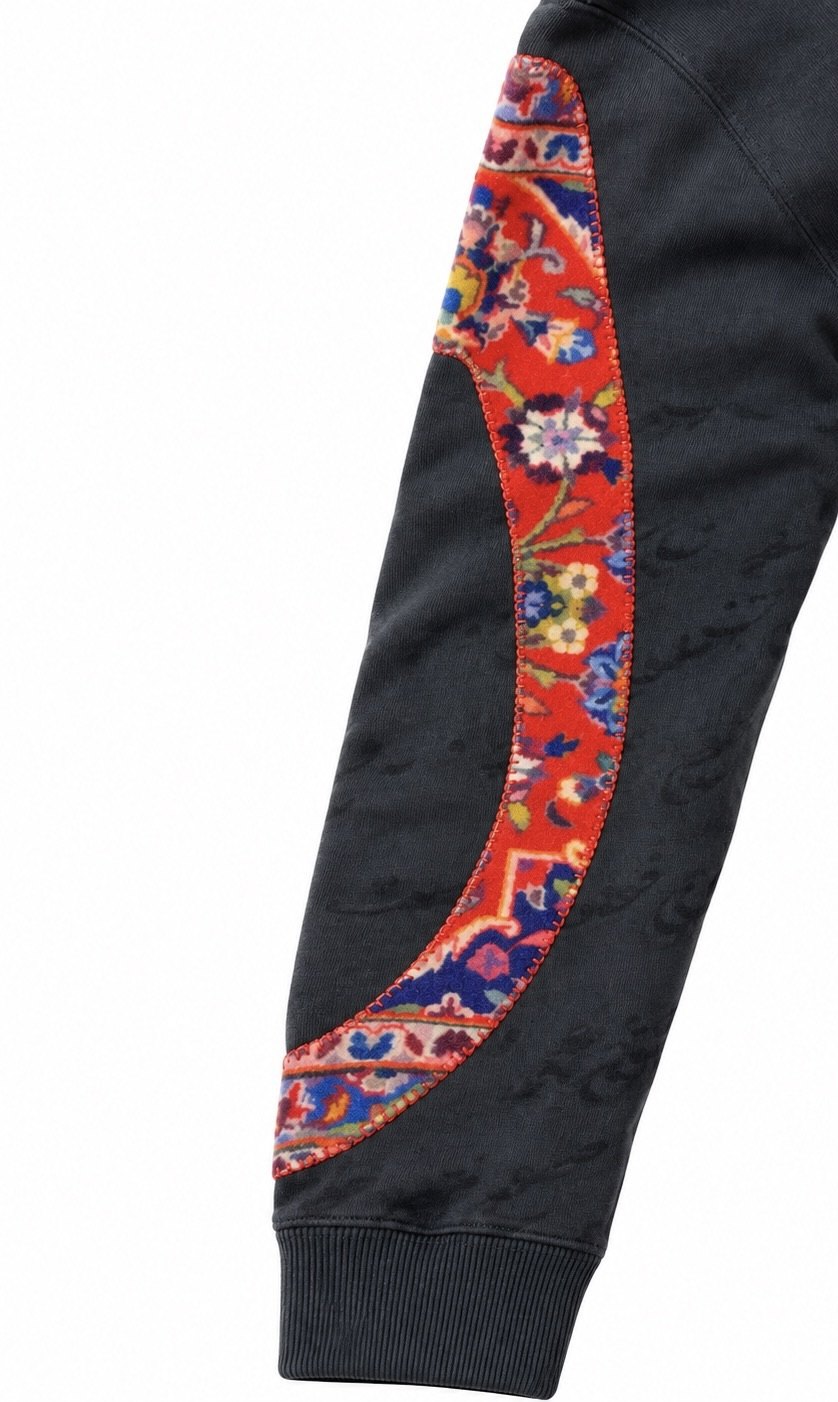
On each sleeve, a long curved panel follows the line of a rug's central medallion from shoulder to cuff, so the carpet wraps around the arm as you move.
03 / 06
Every panel is edged in red blanket stitching, the way a weaver finishes the edge of a carpet. It frames the rug and keeps the edges clean, wear after wear.
04 / 06
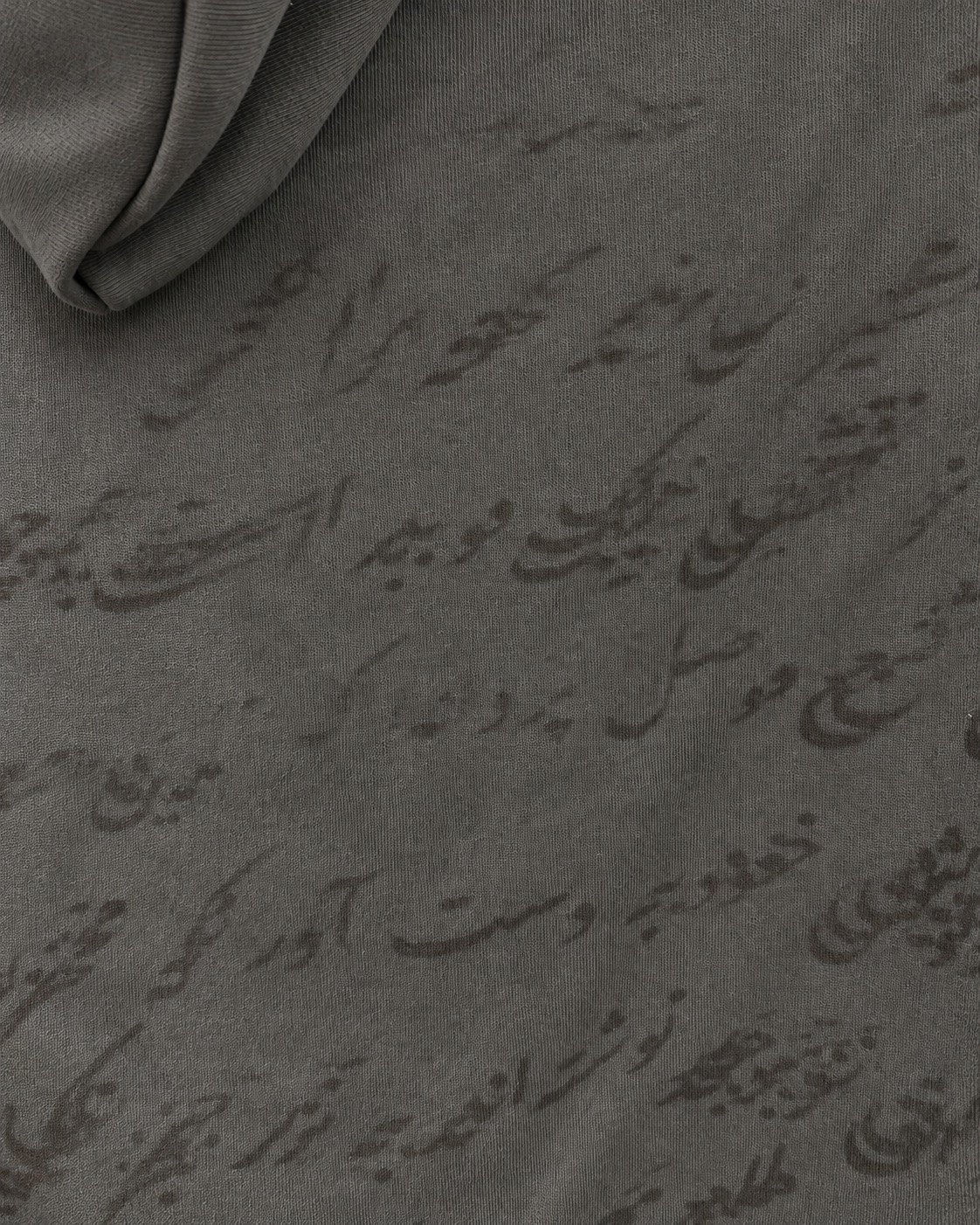
A full drawcord hood, with the ghazal continuing up and over it. The two chest panels open either side of the cords like the halves of a single rug.
05 / 06
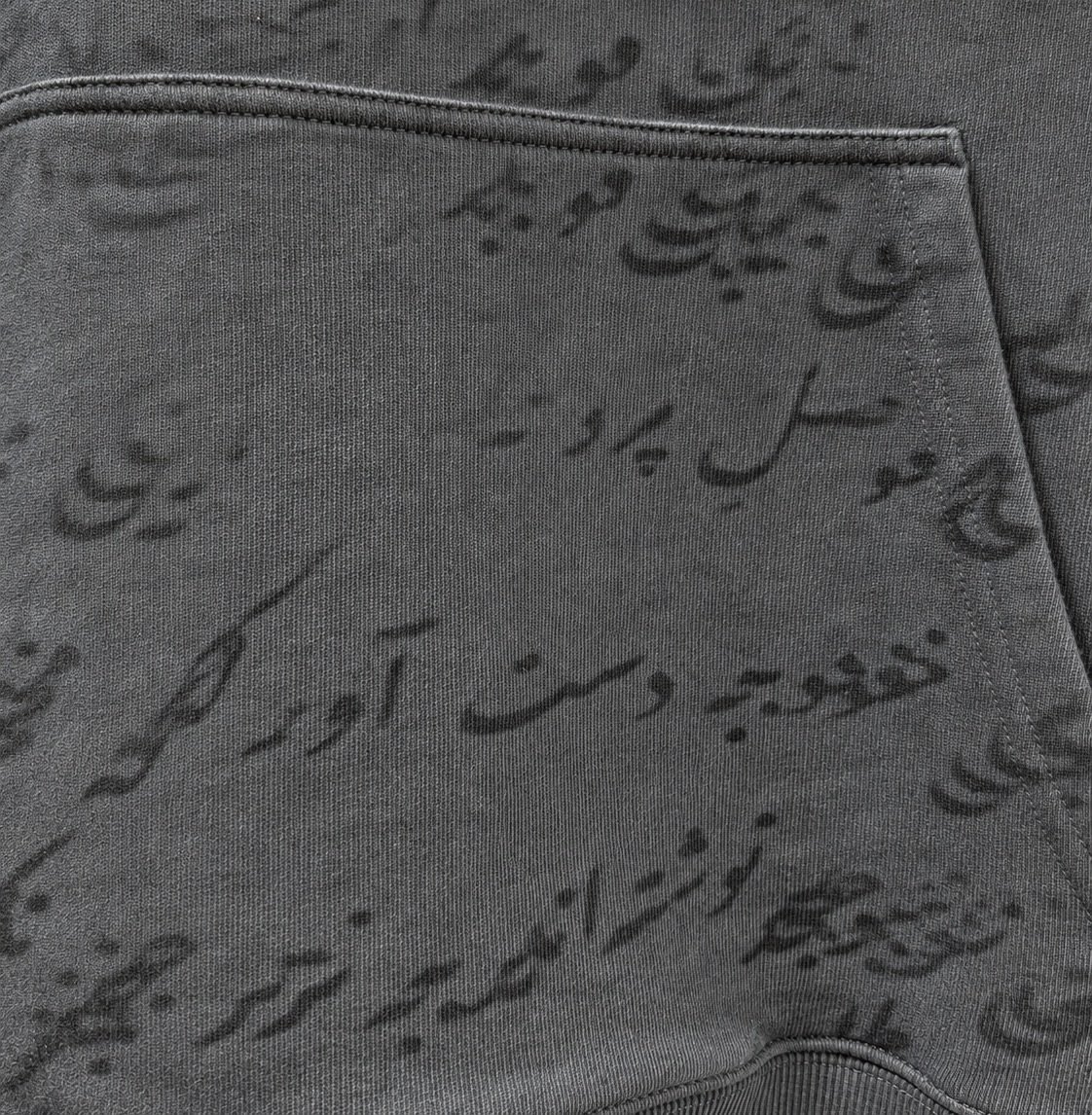
A deep kangaroo pocket, printed edge to edge with Hafez's lines. The calligraphy carries straight across the seams, so the poem never breaks.
06 / 06
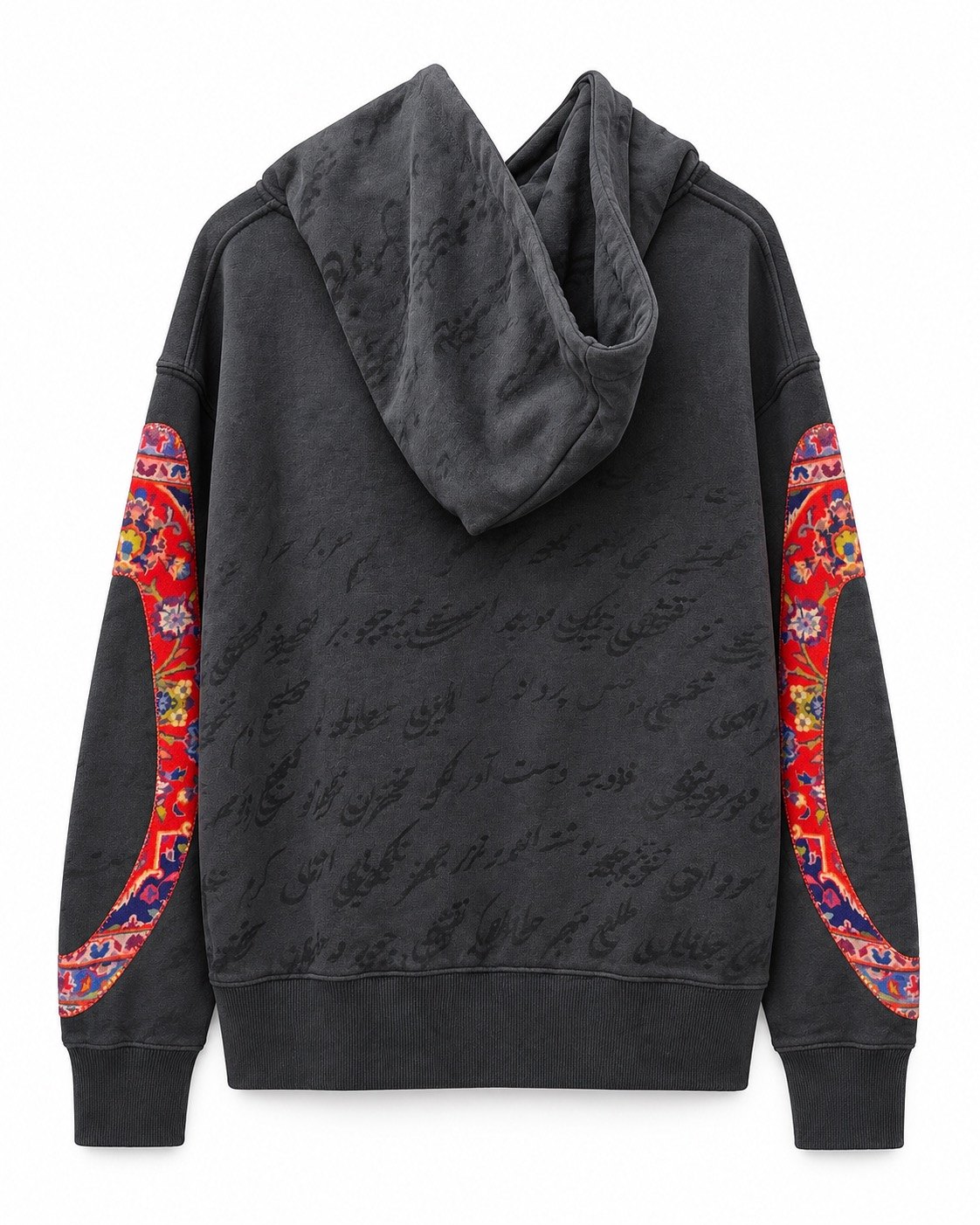
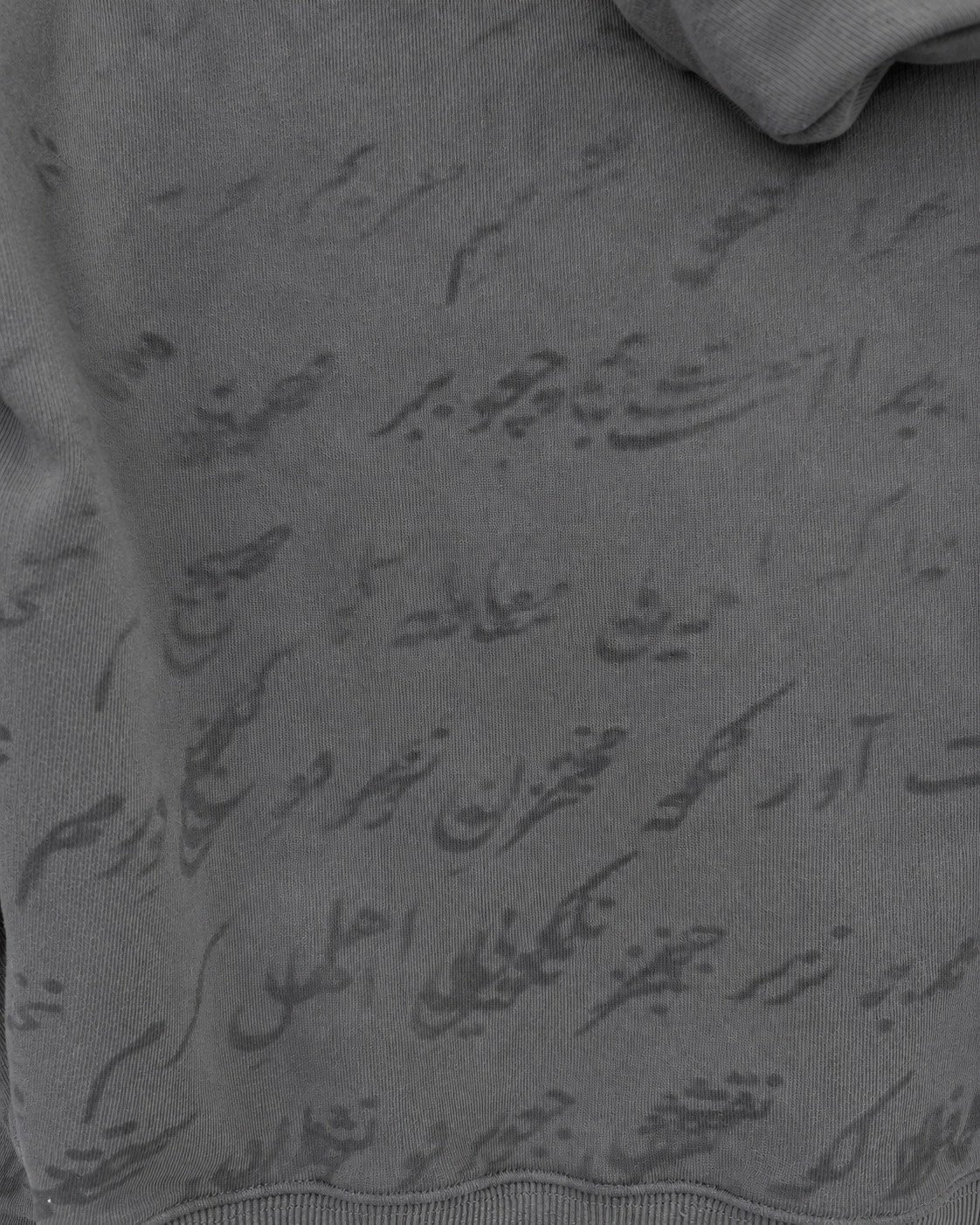
The ghazal runs across the whole body, hood and sleeves in Nastaliq script, printed just darker than the washed black cloth. In daylight it disappears; up close, the words come forward.
02 — The Rug
The panels are drawn from the classic red Persian carpet: a deep red field scattered with blossoms and palmettes, indigo corners, and ivory guard borders running along the edge. It is the rug found in grandmothers' sitting rooms from Tabriz to Kerman.
Each chest panel is cut as the corner of a rug, so the border and the indigo corner sit at the outside edge and the flowers open towards the centre. Side by side, the two mirrored panels read as one carpet split by the drawcords.
On the sleeves, the panels follow a long arc, the curve of a rug's central medallion, from shoulder to cuff. Every panel is edged by hand-style blanket stitching in red thread, the way a weaver finishes the edge of a carpet.
حافظ
Hafez of Shiraz · c. 1315–1390
03 — The Poet
Khwāja Shams-od-Din Mohammad, known as Hafez, was born in Shiraz in the fourteenth century and spent almost his whole life there. His name means "one who knows by heart", a title for those who had memorised the Quran. He left behind a single book, the Divān: around five hundred ghazals, short poems about love, wine, loss and the passing of time.
Every couplet of this ghazal ends with the same words, nakhāhad mānd, "will not remain". Grief will not remain. Power, pride and gold will not remain. It is a poem for hard times, written by a man who lived through war and the fall of kings, and it ends on hope: only kindness lasts.
Hoodie 00 is the first piece from Aleizad, and we wanted it to begin with that promise. The rug is made to outlast the hands that wove it. The poem tells us what is worth leaving behind. Worn together, they say the same thing: whatever you are going through now, it will not remain.
04 — The Poem
A ghazal by Hafez of Shiraz (c. 1315–1390), the most loved poet in the Persian language. Every couplet ends on the same refrain, nakhāhad mānd, “will not remain.” Grief will not remain, power will not remain, gold will not remain. The one thing that lasts, he says, is the goodness of the kind.
رسید مژده که ایّامِ غم نخواهد ماند
چنان نماند، چنین نیز هم نخواهد ماند
The good news has come: the days of grief will not remain.
That time did not remain, and this one too will not remain.
من ار چه در نظرِ یار خاکسار شدم
رقیب نیز چنین محترم نخواهد ماند
Though in my beloved's eyes I have been brought low as dust,
my rival, too, will not remain so honoured.
چو پردهدار به شمشیر میزند همه را
کسی مُقیمِ حریمِ حَرَم نخواهد ماند
Since the keeper of the curtain strikes at all with his sword,
no one will remain a dweller in the sanctuary's inner court.
چه جایِ شُکر و شکایت ز نقشِ نیک و بد است؟
چو بر صحیفهٔ هستی رقم نخواهد ماند
Why give thanks, or why complain, for the marks of good and bad,
when nothing written on the page of being will remain?
سرودِ مجلسِ جمشید گفتهاند این بود
که «جامِ باده بیاور که جم نخواهد ماند»
They say the song sung at the court of Jamshid was this:
“Bring the cup of wine, for Jam himself will not remain.”
غنیمتی شِمُر ای شمع وصلِ پروانه!
که این معامله تا صبحدم نخواهد ماند
O candle, count the moth's embrace a treasure,
for this bargain will not remain until the dawn.
توانگرا! دلِ درویشِ خود به دست آور
که مخزنِ زَر و گنجِ دِرَم نخواهد ماند
O rich one, win the heart of the poor one at your door,
for the vault of gold and the hoard of silver will not remain.
بدین رَواقِ زَبَرجَد نوشتهاند به زر
که «جز نکوییِ اهلِ کرم نخواهد ماند»
Upon this emerald vault of heaven they have written in gold:
“Nothing but the goodness of the generous will remain.”
ز مهربانیِ جانان طمع مَبر حافظ
که نقشِ جور و نشانِ ستم نخواهد ماند
Hafez, do not give up hope of your beloved's kindness,
for the mark of cruelty and the trace of injustice will not remain.
English translation by Aleizad.
The Calligraphy
The ghazal runs across the whole hoodie in Nastaliq script, printed tone-on-tone so it is felt more than seen. In some light it disappears; in others, the lines of Hafez rise out of the fabric.
Why these two
A good Persian rug is made to outlive the person who weaves it. It passes through generations, softening underfoot. Hafez writes about the other side of that truth: kingdoms, wealth, sorrow and pride all pass, and none of them is the thing that endures. Put the two together and the message is simple. Hard days will not remain. What you build with care, and the kindness you show, will.
05 — Details
The Making
Made in small runs with an artisan partner in Italy. Each hoodie goes through the same four stages. Here is where Hoodie 00 is today.
Complete
1The rug panels and the placement of the poem are drawn up as a full technical pack, down to the angle of every curve.
Complete
2The rug design is rendered in a textured pile fabric, chosen to come as close as possible to the feel of a hand-knotted carpet.
We are here
3Prototypes are cut, stitched, worn and corrected until the panels lie right on the body and the stitching holds.
Next
4Only then is the edition produced, in limited numbers, with each panel placed and stitched on by hand.
Estimated Price
£300 – £500
The final price will be confirmed once sampling is complete. Everyone on the list hears it first, before release.
Chapter Zero · Limited
Hoodie 00 — Will Not Remain is the first piece from Aleizad, numbered from zero because it is where everything begins. Leave your email to hear about the release before anyone else.